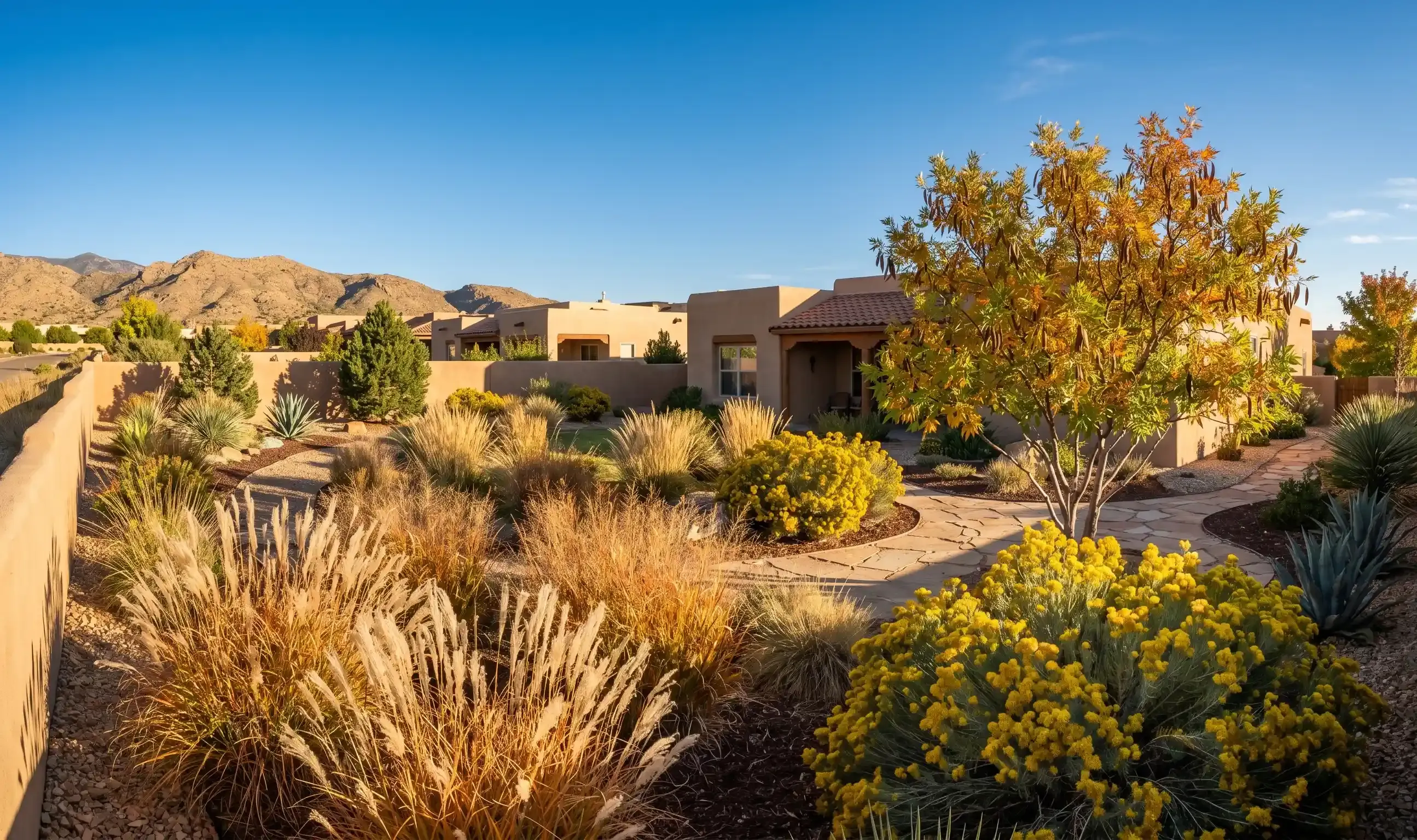
Albuquerque sits at 5,300 feet in the Chihuahuan Desert, and most of the ornamental plants sold at big-box nurseries were never meant for it. They look fine in spring, struggle through July, and are often dead by October. Native and xeric-adapted plants tell a different story.
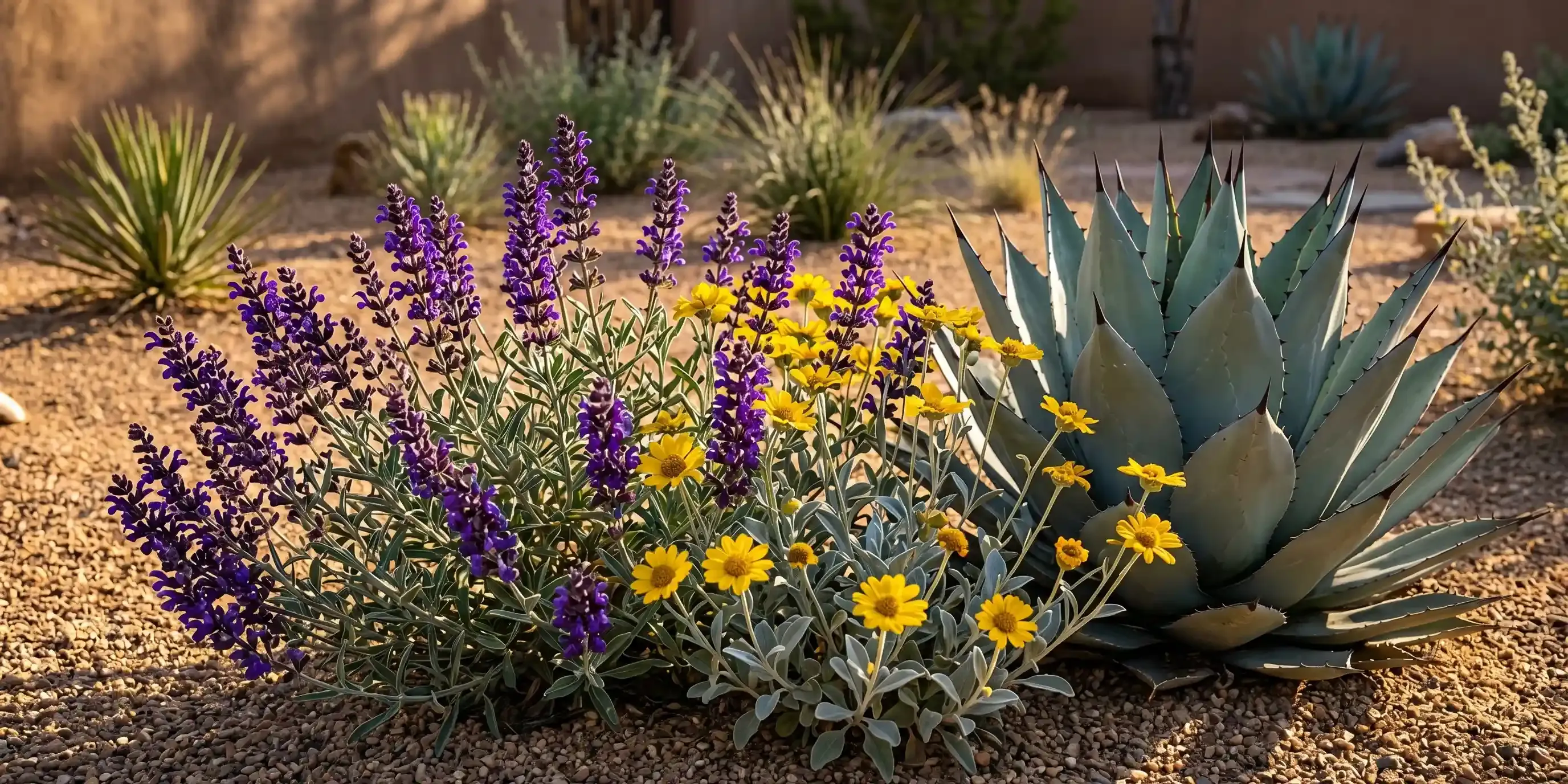
Purple Salvia (Salvia greggii) blooms from late spring through frost, drawing hummingbirds and bees without any supplemental water once established. Plant it in full sun and ignore it. That's the care routine.
Desert Willow (Chilopsis linearis) is technically a flowering tree, not a willow, and it does better here than almost any other tree we plant. It tops out around 20 feet, produces trumpet-shaped blooms all summer, and drops its leaves cleanly in fall. No messy seedpods, minimal litter.
Apache Plume (Fallugia paradoxa) handles the worst of our alkaline clay soils without complaint. Its white flowers are pretty in late spring, but the real show is the feathery seed heads that turn the plant silver-pink through summer and into fall.
Penstemon strictus (Rocky Mountain Penstemon) produces tall spikes of blue-purple blooms in May and June. Hummingbirds can't leave it alone. It self-seeds modestly, so a single planting gradually fills a bed over two or three seasons.
Cliffrose (Purshia mexicana) is one of our favorites for clients who want fragrance. The small yellow-white flowers smell like orange blossoms in late spring. It tolerates full sun, rocky soil, and drought once established, and the silvery foliage looks good year-round.
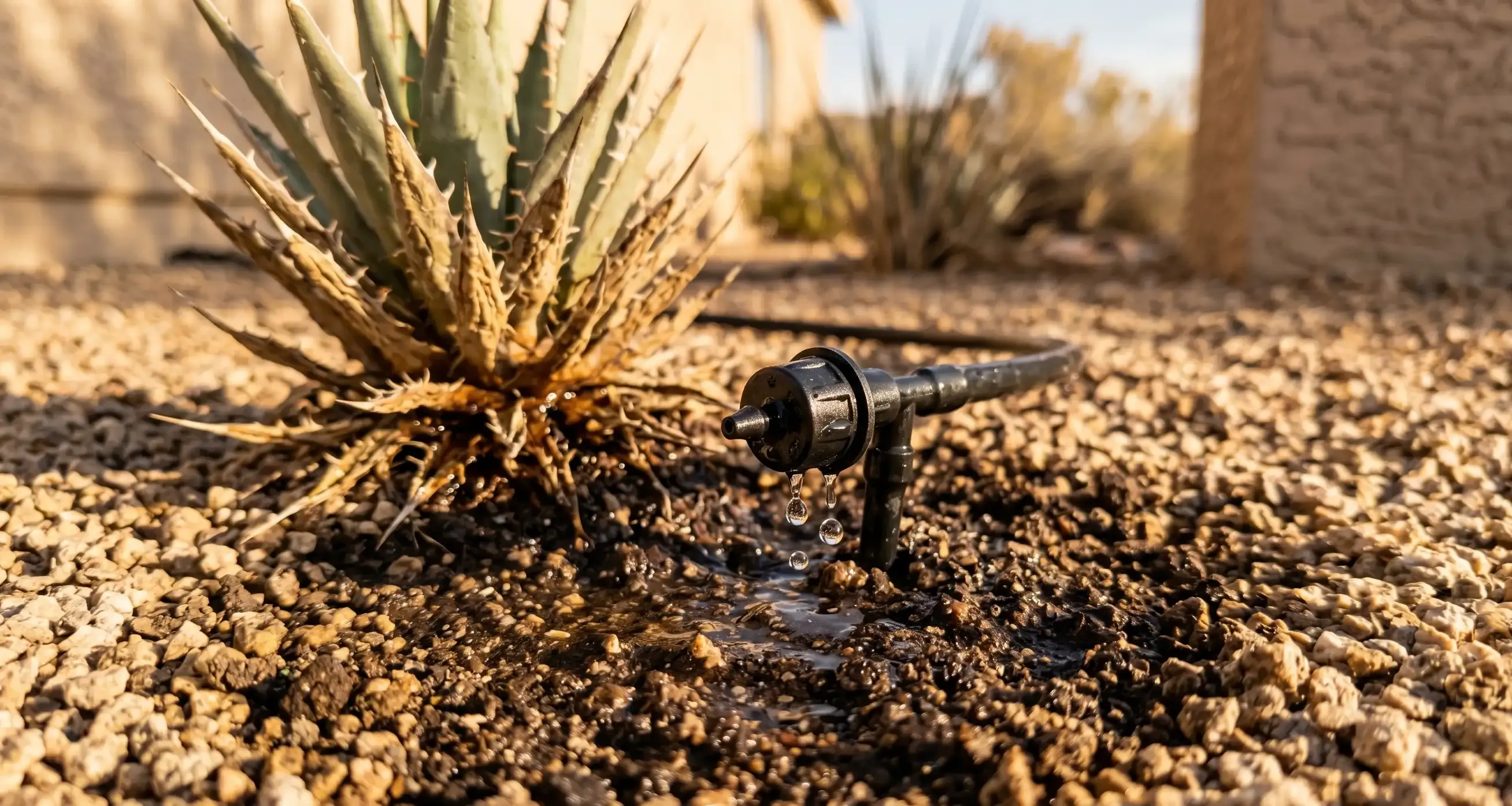
All five of these plants share one trait: after the first full year in the ground, they need almost no irrigation. Establishment watering (once or twice a week for the first summer) is all they need to build a root system deep enough to survive on Albuquerque's rainfall alone.
Questions about your yard? The Mesa Verde team offers free on-site estimates for Albuquerque and surrounding areas.
Get a free estimate